In our daily life, the most afraid is that the walls of the home grow mold, which is not sanitary and difficult to clean. Mildew on the wall is a headache. How can you remove the mold on the wall? Let's have a look.
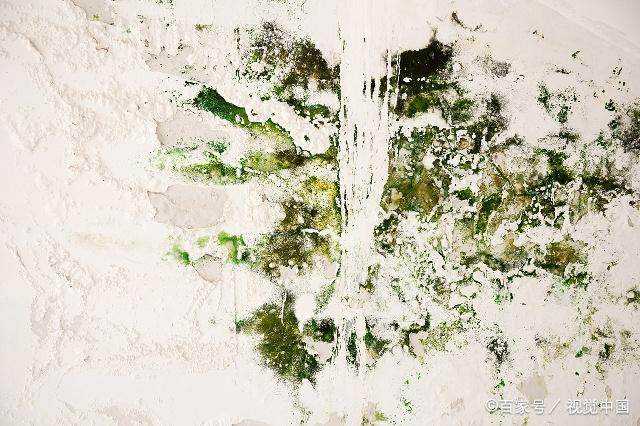
In what circumstances are walls susceptible to mold?
1. Water supply and drainage pipe or heating pipe leakage, leading to the wall damp, a long time, the wall will become moldy.
2. External rainwater seeps into the room, causing the walls to be moist.
3. Wall insulation is not done well, resulting in indoor and outdoor temperature difference is large, so the water in the indoor air will condense on the wall when it is cold, resulting in wall moisture.
To prevent mildew on the wall
1. To prevent mildew on the wall surface, the impermeable liquid can be applied on the wall surface before decoration to form a colorless and transparent waterproof adhesive film layer on the wall surface to prevent the immersion of external water.
2. If the wall is often moldy, it may be that the waterproof layer is not well done. In this case, we should ask the professional decoration team to redo the waterproof layer.
3. If you find black spots on the wallpaper, don't think it's dirt and wipe it with water.
Tips for simple handling:
When there are mildew on the wall, we can use the simplest way to solve the problem. We all have toothbrushes at home, or other brushes. These brushes can temporarily remove the mildew on the wall. If we want to prevent the mold area from expanding, we can also use a dry toothbrush to clean the mold, and then dip a soft cloth with alcohol. In this way, the wall will become more dry, mold can not breed.
bleach
After being diluted with bleach powder and appropriate amount of water, it can be used to solve the problem of mildew on the wall after being installed in the spray bottle. If you don't want bleach on your hands, you can also wipe them with a cloth. Once the wall is not wet, keep dry, generally will not produce mildew.
alcohol
If the mold on the wall of our house is not very serious, then we can also use alcohol to brush the wall. After diluting alcohol and water, brushing on the wall can remove most of the mold. However, when we use alcohol, we must pay special attention to do not let a large number of alcohol on their own body. Those who have masks, glasses and gloves at home should be well equipped. And in the wall coated with alcohol, but also pay attention to ventilation. Let the smell of alcohol go quickly.
Less windows
Xiaobian doesn't mean that we should not open the window, but we should try not to open the window when the weather is wet, because if we don't want to have mould on the wall, we should keep the wall dry and humid. If we have to ventilate, then we can turn on the dehumidifier or fan at home. If the surface of furniture at home will often appear small water droplets or bubbles, it should be noted that once this situation occurs, then it means that the moisture in the home is relatively heavy.
The leakage of the drainage pipe or heating pipe in our house causes the wall of our house to be wet, and the wall will naturally become moldy after a long time. If the rain, attached to the wall of the water vapor, penetrated into the interior, will also lead to our home wall mold.
Temperature difference is also a reason for the wall to be wet, not dry and mildew. Some decoration companies do not do a good job in the insulation function of the wall during the decoration, which will cause the temperature difference between indoor and outdoor relatively large, so that the water in the indoor air will condense on the wall surface when it is cold, leading to the wall moisture. Then the mold comes out naturally.
Remove stubborn wall mildew:
1. First of all, use sandpaper to grind clean, if there is delamination, use a blade to smooth;
2. Then, if the wall is not smooth, it needs to be repaired with putty;
3. Finally, if the wall is flat, it is recommended to brush the sealing primer first, and then brush the emulsion paint.
How to prevent moldy walls?
1. Purchase of indoor desiccant as for indoor, can effectively remove indoor moisture. The desiccant should be replaced in time after it is used up.
2. To often open the window ventilation, or turn on the fan, to maintain indoor air circulation.
3. The best way to prevent wall mould is to prevent wall condensation. In the north, when the room temperature is 18 ℃ and the relative humidity is 60%, anything below 10.1 ℃ will condense.
There are three reasons for wall condensation: design, construction and use. The design reasons are as follows: Although the wall meets the requirements of moisture preservation, the beams, plates and columns are not moisturized; the heating technical measures are not effective; the radiator is not arranged properly; the convex corners and special-shaped columns on the windward surface of the external wall are not thickened with moisture preservation layer, resulting in the thermal insulation effect not reaching the standard. The construction reasons are: the insulation material does not reach the design thickness; strong cracking and ventilation; the joints between doors and windows and walls are not treated with moisture sealing.
To prevent mildew on the wall surface, the impermeable liquid can be applied on the wall surface before decoration to form a colorless and transparent waterproof adhesive film layer on the wall surface, so as to prevent the immersion of external water. If the wall of our house is often moldy, it is very likely that the waterproof layer is not well done when decorating. If this is the case, we should ask the professional decoration team to do the waterproof layer again.
To often open the window ventilation, or turn on the fan, to maintain indoor air circulation. Also keep the walls dry. Purchase of indoor desiccant as for indoor, can effectively remove indoor moisture. The desiccant should be replaced in time after it is used up.
In view of the above problems, we should take measures to solve these problems, such as adding thermal insulation layer, replacing the original insulation material with high-efficiency thermal insulation material, and doing moisture sealing treatment for ventilation. For condensation caused by improper use of users, excessive indoor humidity should be avoided. As long as it is designed, constructed and used according to the requirements, the problem of moldy wall can be completely avoided.