1. Don't buy a turtle that opens its mouth to breathe. It may have respiratory diseases.
2. To see if the meat part of the turtle is very full, if the turtle retracts into the shell very inside, maybe the turtle is too thin. A healthy turtle should be like a shell full of water. If it looks hollow, don't buy it.
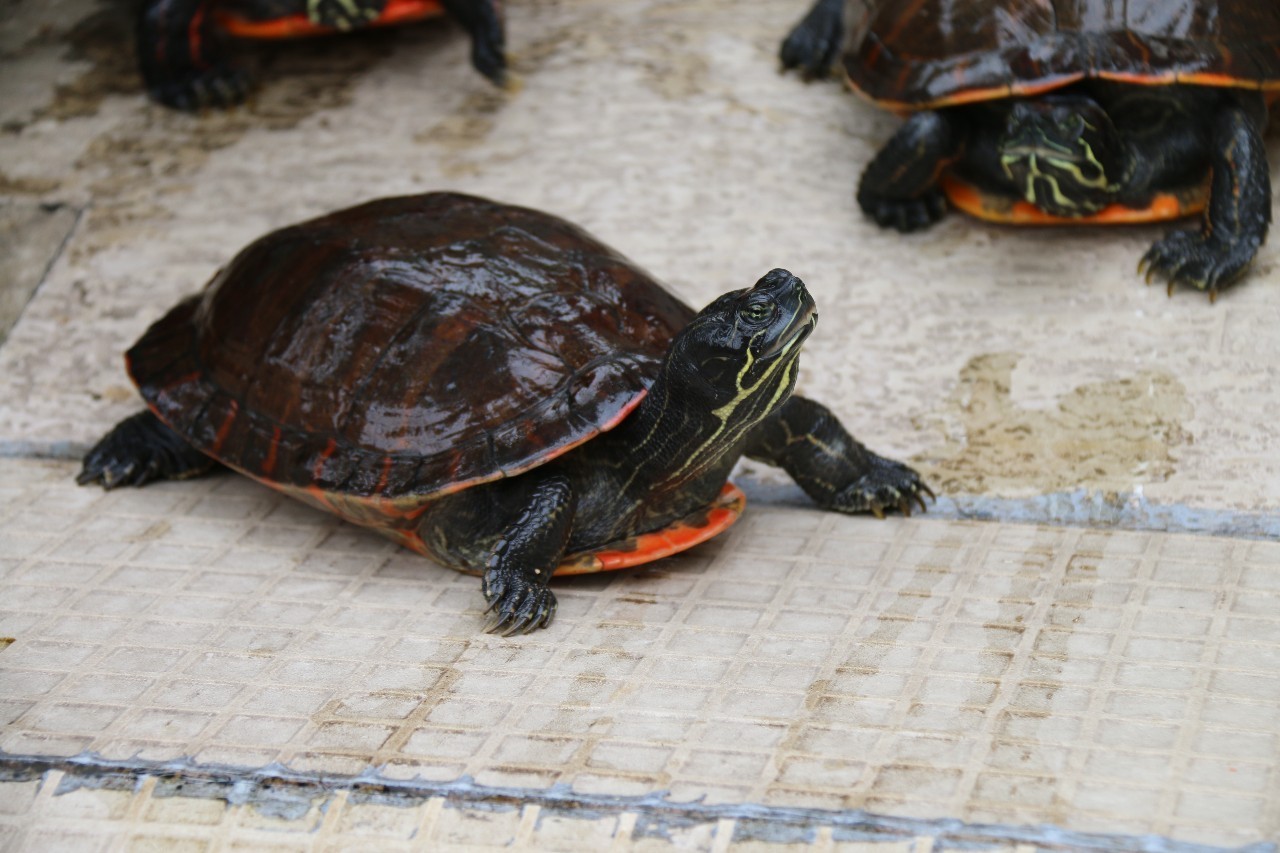
3, check whether the mouth and nostrils have abnormal secretion of annual or foam secretions. If abnormal mucus and foam substances are secreted, they may be infected with pneumonia or respiratory diseases.
4. Gently pull your hands to see if the turtle's limbs retract or struggle forcefully. If there is no force, it may be too weak.
5. It's better to see the appearance or photos of this kind of turtle first, so that the defective turtle will not be regarded as normal.
6. Look at the companions in the same nest. Don't buy the one hiding in the dark corner. Just pick the most lively one.
7. Turn to look at the anus, if there is dirty stool, there may be digestive problems.
8. Press the tortoise shell gently with your fingers, and touch the tortoise shell for softening and deformation. In healthy individuals, both the abdominal and dorsal carapace are very hard. If the tortoise shell is softened or deformed, it may be due to insufficient sunshine and insufficient intake of vitamin D and calcium.
9. Check the wrinkling parts of the inner concave of the limbs, tail and neck for ectoparasites. There are often parasitic epiphytes on the sunken part of the turtle's body surface.
10. Check whether there is trauma or bite mark on the surface of the turtle, that is, white or red mass. Aquarium shops often keep dozens of turtles together and may bite each other, especially aggressive species.
11. Observe whether the tortoise can keep balance when swimming. When a healthy turtle swims forward, if it is found that it is unable to maintain body balance in the water and leans to one side, it indicates that the respiratory tract or cloaca may be infected.
12. Observe whether the walking posture is normal. When a healthy tortoise walks, the carapace will be parallel to the ground. If it tilts to one side or the front end is tilted upward, it indicates that there is something wrong with its health.
13. Check for abnormal breathing sounds. Respiratory murmurs are also symptoms of pneumonia.
14. Check whether the eyes can be opened and whether there are lumps or mucous secretions on the eyelids. Eyelid swelling may be caused by low temperature or poor water quality.
15. If you can support the forelimb of a turtle with your index finger and thumb, if you can support it and climb up, your health is still good. If you can't support it, don't buy it.