Violets are very popular and popular in Europe and the United States. In recent years, they are also popular in our country and are deeply loved by people. Many people also cultivate violets at home as bonsai to decorate their home environment. The cultivation methods of violets sorted out below are hoped to help you.
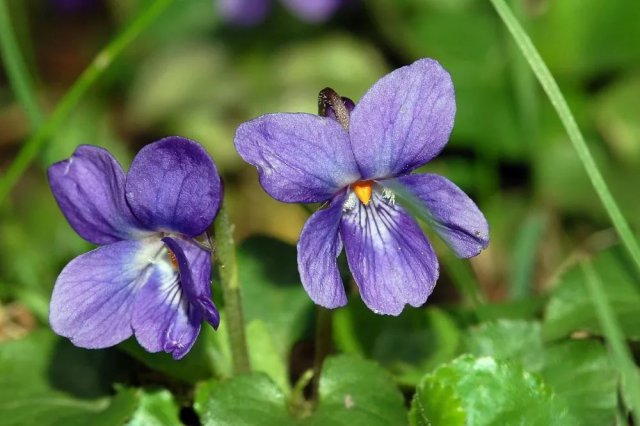
Cultivation methods of violet
The best breeding time: the sowing time of violets is generally from the middle of August to the first ten days of October, which can also be adjusted according to the flower time. Sowing in the greenhouse in February, then flowering in May; sowing in March, flowering in June, and so on, but sowing in July, it can not bloom in the greenhouse until February to march of the next year.
The best growing soil: Violet soil requirements are not strict, but in good drainage, neutral alkaline soil growth better, avoid acid soil.
Requirements of growth humidity: the amount of water should be determined according to the growing season. In winter and early spring, when the temperature is low, it is not appropriate to water too often. It should be watered after the basin soil is dry, and the relative humidity should be kept at about 40%. In summer, when the temperature is high, water should be watered more frequently, and the relative humidity should not be less than 70%. In autumn, with the cool climate, the watering should be reduced accordingly.
The optimum growth temperature is 15-18 ℃ in the daytime and 10 ℃ in the night.
The best growth light: violet flower needs a certain amount of light, and is very resistant to light, but when the light intensity exceeds 75000 lux, shade is needed, otherwise the plant growth is poor.
Notes on usual maintenance of violet
1. Autumn sowing time: not too late, sowing too late will affect the plant growth, overwintering, flowering quantity and quality.
2. Temperature requirements: like light, full sunshine. The temperature should be controlled between 10 ℃ and 30 ℃, and the temperature should not be lower than 5 ℃ in winter.
3. Watering requirements: the basin soil should be watered enough when sowing, and should not be directly watered after sowing. If the soil becomes dry and white, spray with a sprinkling pot or use the "soaking pot method" to keep the soil moist. After planting, water was poured into the soil. In the early stage of growth, water should be controlled and the soil should be kept in a little tide and dry. Generally, water should be poured once every 3-4 days. The lower the temperature, the less water you can water. When the ambient temperature rises, the watering amount should be increased.
4. Fertilization requirements: sufficient base fertilizer should be applied when planting, and appropriate fertilization should be applied in the early stage according to the growth of the plant. Do not apply too much fertilizer at a time, or it is easy to cause the plant to grow too long. After the plant is pregnant with buds, topdressing 0.1% - 0.2% KH2PO4 solution once a week.
5. Illumination and ventilation: if the illumination and ventilation are not enough, they are susceptible to diseases and insect pests.
Water culture of violet
The process of plant hydroponic acclimation is basically the same, we can try it.
First of all, choose disease-free healthy violet plant, wash the root, try not to damage the root. Take a glass container and immerse two-thirds of the root of the plant into water (if it is tap water, it is better to boil or sun to remove chlorine in the water), but make sure that part of the root is exposed to the air, so it is more delicate to hold water and check the root condition from time to time. If everything is normal, change water once a week until the roots grow enough new roots, that is water rooting, indicating the success of hydroponics. At this time, you can buy the recommended nutrient solution in the market, prepare it into water solution according to the requirements, cut off the old root and rotten root of the plant root, and move the same operation to the nutrient solution solution solution, and then update the nutrient solution regularly.
matters needing attention:
Water change time: generally, 5-7 days is suitable for changing water. But the change of water depends on the season. The flowers just hydroponically need to change water once every 1-2 days. In summer, plants grow vigorously, the temperature is high, the water is easy to deteriorate, and the time should be shortened. In winter, most of the plants are in semi dormancy or dormancy state, the temperature is lower, and the interval of water exchange can be longer. Generally speaking, the time interval of changing water is shorter, which is beneficial to plant growth.
Violet is cold resistant but not shade resistant. It is suitable for high position. It is easy to be damaged by diseases and insect pests when it is hot and poorly ventilated in the weather of mildewy rain. If the fertilization is not suitable for excessive hydroponic cultivation, it can only be added with nutrient solution regularly, otherwise it is unfavorable to flowering; the light and ventilation must be sufficient, otherwise it is easy to suffer from diseases and insect pests.
Pest control of violets:
1. Downy mildew: avoid cutting too long and remove the diseased plants in time. A new type of fungicide, B-A 3, was developed by Shanghai agrochemical Co., Ltd. with a concentration of 2-3 g / L water.
2. Fusarium wilt: the seeds can be soaked in 50-55 ℃ water for 10 minutes, which can kill the bacteria carried by the seeds; the soil used for planting violets should be disinfected and reused, and 1000 times potassium permanganate solution can be used as the medicament. If the infected plants are found, they should be removed and burned immediately to prevent infection to other healthy plants.
3. Verticillium wilt: this disease is also very serious on other Cruciferae Plants. If violets are placed together with other cruciferous plants, they will infect each other. Therefore, weeds of Cruciferae should be eradicated and isolated from other Cruciferae Plants. Before the occurrence of the disease of violet plants, it should be sprayed with 3-4 ℃ borme calcium sulfide mixture for prevention, and 65% mancozeb can be sprayed in the growing season according to the incidence It can be prevented and treated with 500-600 times of natural powder or 250-300 times of sodium dichloride.
4, mosaic virus: should be isolated from other poisonous plants, should be promptly eliminated aphids, pesticides can be used as botanical insecticides 1.2% smoke alkaloids 2000~4000 times liquid or internal pesticide 10% imidacloprid 2000 times liquid spray control.
5. Epidemic disease: in addition to the selection of disease resistant varieties and rotation cultivation management, the disease should be treated in time, and the central diseased plant should be treated immediately.
6. Leaf spot disease: remove the remains of diseased plants and reduce the source of infection; select disease resistant varieties, appropriately apply phosphorus and potassium fertilizer to improve the disease resistance of plants; implement rotation; irrigate along the soil surface to avoid spraying water on the plants; spray 1% Bordeaux solution or 25% carbendazim WP 300-600 times, or 50% thiophanate methyl 1000 times, or 80% mancozeb 400-600 times.
7. Damping off disease: timely pulling out the diseased plants; disinfecting the soil; properly controlling watering in the early stage of seedling emergence; watering with 300-400 times of 50% mancozeb aqueous solution or 1000 times of 70% thiophanate methyl WP in the early stage of the disease.
8. Canker disease: proper control of moisture, light transmission and ventilation.
9. Insect pests: eliminate by removing weeds nearby; spray 40% dimethoate or Omethoate 1000 ~ 1500 times, or fenvalerate 2000 ~ 3000 times or 80% dichlorvos 1000 times.