With the continuous improvement of consumers' requirements for environmental protection, ultra-thin and high image quality, LED TV with its absolute advantages in energy saving, environmental protection and color performance has become the new trend of flat panel development in 2009. Today, for you to introduce the LED in detail, so that you can be a smart consumer, to save their right to know.
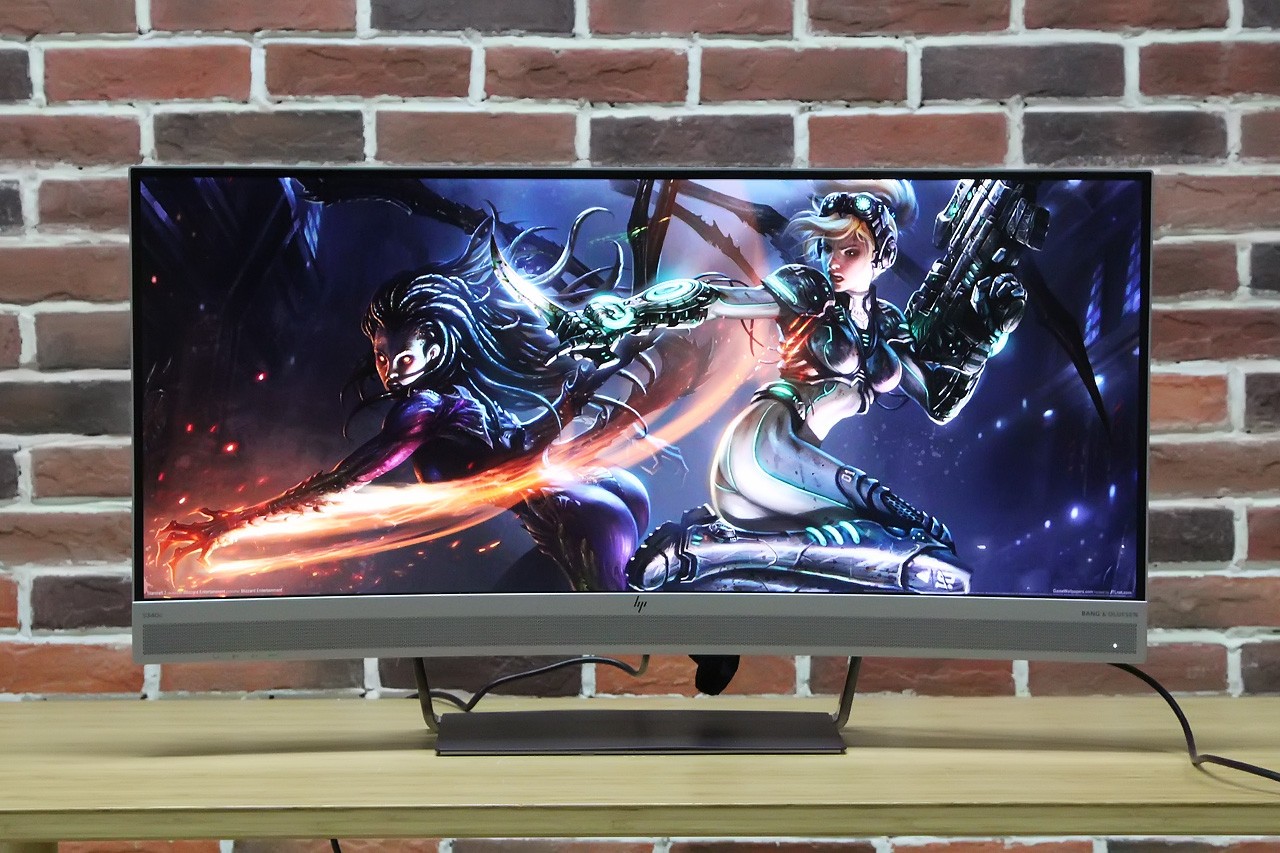
LED is divided into many kinds, not all LED backlight TV is the perfect picture quality performance. According to the color, LED light source is divided into single color, double primary color and three primary color (true color). Of course, with the increase of the number of colors, the improvement of image quality and the performance of color gamut will be quite different, and the cost will also have a greater embodiment. This can also explain why all the products are LED backlight. Some products often cost 40000 or 50000, while others only have 10000 or 20000. Some manufacturers also take advantage of consumers' immature understanding of LED technology to publicize the selling points of their products. However, consumers' right to know has been violated.
Classification of LED display screen
First of all, let's take a look at what kinds of LED displays are divided into? What are their characteristics.
According to the use environment, it is divided into indoor, outdoor and semi outdoor
The indoor screen area is generally less than ten square meters, with high point density. It is used in non direct sunlight or lighting environment, and the viewing distance is several meters away. The screen does not have the ability of sealing and waterproof. The outdoor screen area generally ranges from several square meters to dozens or even hundreds of square meters, with relatively sparse point density (mostly 1000-4000 dots per square meter). The luminous brightness is 3000-6000cd / m2 (different orientations and different brightness requirements). It can be used in direct sunlight conditions. The viewing distance is tens of meters away. The screen has good wind and rain resistance and lightning protection capability. The semi outdoor screen is between outdoor and indoor, with high luminous brightness, and can be used outdoors without direct sunlight. The screen body is sealed to a certain extent, and is generally under the eaves or in the window.
According to the color, it can be divided into single color, double primary color and three primary color
Monochrome refers to the display screen has only one color of luminous material, mostly single red, in some special occasions can also be yellow green (such as funeral home).
The double primary color screen is generally composed of red and yellow green luminescent materials.
The three primary color screen is divided into full color, which is composed of red, yellow green (wavelength 570nm), blue and true color (nature color), composed of red, pure green (wavelength of 525nm), and blue. At present, the rgb-led backlight used by Sony's x4500, sharp's xs1a and Samsung's 9-series is a tricolor LED backlight. Compared with monochromatic LED, rgb-led expands the range of color gamut through red, green and blue LED backlight, and controls the screen light leakage to a lower limit, providing rich black expression and effectively reducing energy consumption.
LED backlight super long life advantage
LED, born in 1960s, has been recognized as the terminator of fluorescent tubes, light bulbs and other lighting equipment. LED lamp is also known as light-emitting diode. Compared with other light sources, the power consumption of single LED lamp is the smallest. From blue to red, LED lights come in many colors, and one special color is white. We define it as "cold white" and "warm white". In all kinds of colors, there are color deviation problems, among which blue and white are more obvious, especially white. Now led suppliers can not effectively control it.
LED light source is composed of many grid like semiconductors, each "grid" has one LED semiconductor, so the LED backlight successfully realizes the planarization of light source. Flat light source not only has excellent brightness uniformity, but also does not need complex optical path design, so that the thickness of LCD can be thinner, but also has higher reliability and stability.
Secondly, in terms of luminous life, LED backlight technology has surpassed CCFL, which is the improvement of CCFL technology. The life span of ordinary CCFL backlight is about 30000-40000 hours, and that of some top CCFL backlights (wcg-ccfl) is about 60000 hours. This life span can last for several years even for frequent users. The life of LED backlight is longer. At present, the life of white LED backlight is as high as 100000 hours. Even if it is used continuously for 24 hours, its service life can be enough for 5 years.
Energy saving and environmental protection outstanding, real Green TV
An important factor in the rise of LED backlight and end lighting is the RoHS directive implemented by EU. The Directive provides for the elimination of lead, cadmium, mercury, hexavalent chromium, polybrominated biphenyls and polybrominated diphenyl ethers from electronic devices sold in EU Member States from 1 July 2006. Mercury is the main component of CCFL and other types of fluorescent lighting. LED lights don't use mercury at all.
In terms of power consumption, compared with ordinary CRT TV, flat panel TV consumes a lot of power, and many consumers are concerned about the energy consumption of TV. It is understood that the 12 million flat-panel TVs sold in 2008 will consume 2.4 billion kilowatts of electricity per year if each TV works four hours a day, which is equivalent to the total annual power generation of several large thermal power plants.
The brightness of LED can be adjusted with the brightness of the screen, which can save more than 30% compared with LCD TV. In this way, when performing images of some dark scenes, you only need to adjust the local light of the necessary backlight area (the black or dark part on the screen), which can show you the high-quality image effect of light and shade compared with nature.
Is led better than CCFL at present?
At present, although the traditional CCFL cold cathode fluorescent lamp consumes a lot of power and has a general luminous quality, its luminous efficiency can reach 50-100 lumens / watt, while the white LED device has a luminous efficiency of only 20lm / W or even lower at the beginning. However, the luminous efficiency of white LED increases by 60% every year. So far, the luminous efficiency of white LED devices has exceeded 50lm / W, reaching the practical level.
Although rgb-led technology has many advantages, it still has some inevitable limitations. For example, due to the use of a large number of independent LED devices, the lattice arrangement is quite dense, not only difficult to ensure the uniformity of each device, but also very poor heat dissipation, can not achieve ultra long life. Secondly, the luminous efficiency of rgb-led backlight is still a little weak. At present, it is generally around 50 lumens / W, and the highest is only 70 lumens / W. to achieve the same level of brightness as ccfl100 lumen / W, it will inevitably lead to the increase of power consumption and heat generation. Secondly, although the color purity of rgb-led is high, the attenuation amplitude of each LED color after long-term use is not consistent, which will also have a greater impact on the image quality.